
Why does my child struggle with handwriting, buttons and bike riding?
How coordination difficulties can affect handwriting, dressing, eating, play and confidence, with practical support and routes to DCD assessment.
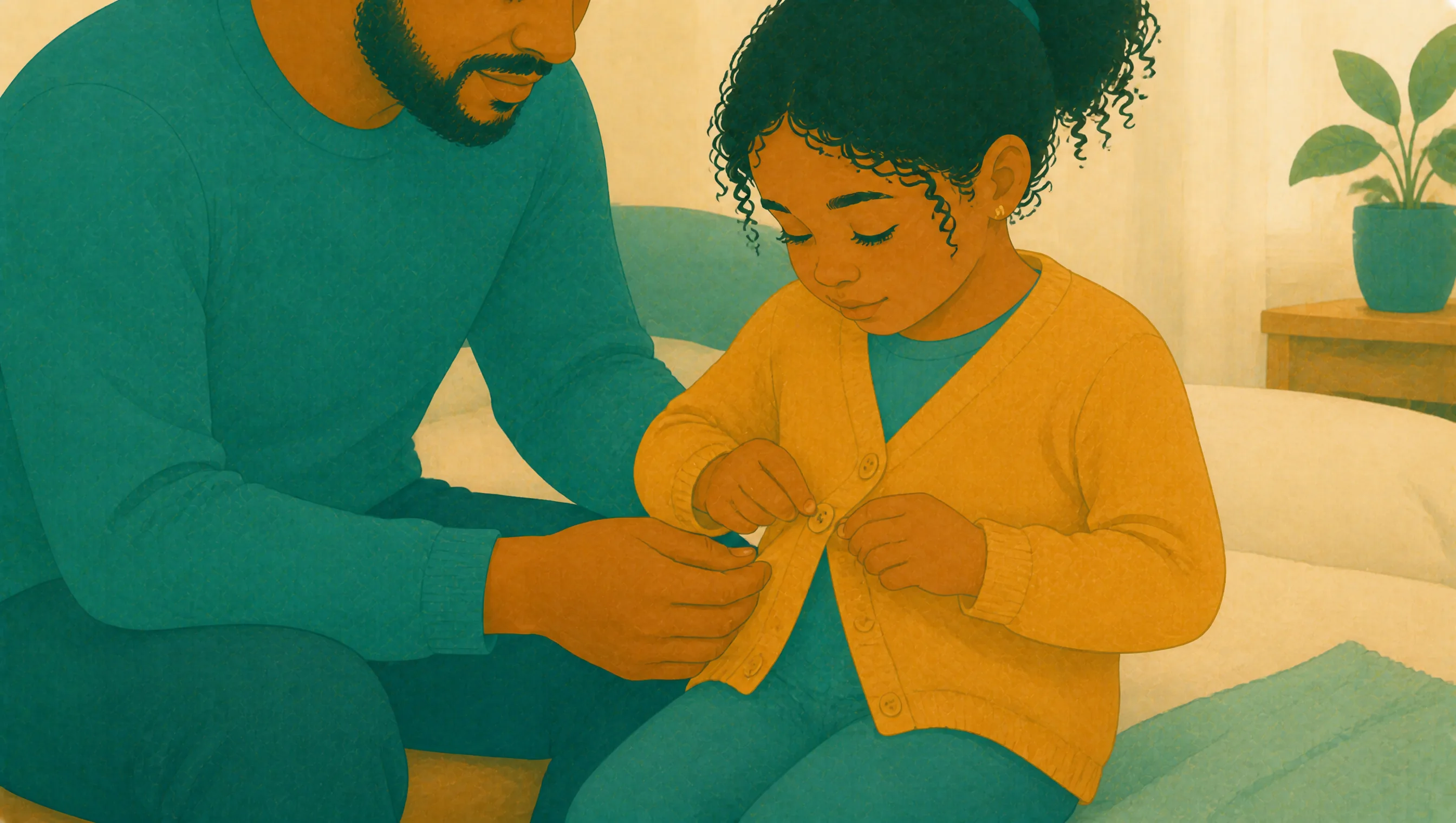
The short answer
Persistent difficulty with handwriting, cutlery, dressing, ball skills, balance or learning movement sequences can reflect developmental coordination disorder (DCD), also called dyspraxia, but individual tasks have many possible explanations. Look for a pattern across daily activities, the effort and time involved, and whether the child has had suitable opportunity to learn. Make tasks accessible now by reducing unnecessary motor load, teaching one component at a time and offering alternatives to handwriting or fast changing. Speak with the SENCO, GP or health visitor when coordination is persistently affecting school, self-care, play or confidence. DCD diagnosis usually involves a paediatrician working with an occupational therapist or physiotherapist and is not normally definite before age five.
- DCD affects motor coordination and everyday activity, not effort or intelligence.
- One untidy task does not identify a coordination disorder.
- Reduce motor barriers while the child learns the skill in manageable parts.
- Assessment considers movement, development, opportunity and daily impact.
- New loss of skills, weakness or sudden gait change needs medical assessment.
You have read your 3 free articles
Continue reading with FamilyFX membership
We keep three articles free so you can see whether FamilyFX is written for you before you pay for anything. Membership opens the full Library, all eight modules, fourteen deep guides, eight practical packs and eight tools for £79.99 a year.
Already a member? Sign in and this page opens straight away.
NeuroFX patients can use an access code for a free first year. Enter it on the join page.