
How do I help my child manage periods?
Prepare for periods with clear information, usable products, discreet school arrangements and health support when pain or bleeding affects daily life.
The short answer
Explain periods before the first one if possible: where the blood comes from, what it may look like, how long bleeding may last, which products exist, how to change and dispose of them, and what to do about a leak. Let the young person try pads, period underwear, tampons or menstrual cups only when those options are suitable and wanted. Sensation, smell, motor skills, remembering, time awareness and access to a toilet can each create a different barrier. Build a small kit for home, school and travel, and agree a discreet way to request help or spare clothes. Ask before tracking somebody else's cycle. If tracking is useful, record timing, bleeding, pain and effects on daily life in the young person's own terms. Do not assign every hard day to hormones. NHS guidance advises speaking to a GP when period pain or heavy bleeding affects daily life, and there are treatments that a clinician can discuss. Medication, hormonal treatment and contraception require an informed conversation with an appropriate health professional and direct involvement of the young person.
- Explain the biology and practical steps before the first period where possible.
- Offer product choice and test the sensory, motor and changing demands of each option.
- Agree discreet access to toilets, supplies, spare clothing and help at school.
- Treat cycle records as the young person's private health information.
- Seek health advice when pain, bleeding or other symptoms affect daily life.
Periods combine biology, sensation, planning, privacy and repeated practical tasks. A young person may understand what menstruation is and still be unable to open a packet quickly, notice when a product needs changing or ask to leave a lesson.
The aim is not to make periods effortless. It is to make the process understandable, dignified and supported, while taking pain and other health concerns seriously.
Explain the whole event before it begins
If possible, explain periods before the first one. The NHS advises early preparation and notes that the timing varies from person to person.1
Cover the practical questions a young person is likely to need:
- Blood comes from the uterus and leaves through the vagina.
- The first blood may be red, brown or mixed with discharge.
- Bleeding usually continues for several days, but timing and amount vary.
- Periods can be irregular at first.
- A person may notice cramps, tiredness or other symptoms.
- Period blood is not an injury and does not mean the person has done anything wrong.
- Pregnancy becomes biologically possible after periods begin, so contraception and sexual-health information also matter.
- Help is available if bleeding, pain or another symptom is difficult.
Use the body words the young person needs for health and safety. Ask which words they want you to use for them. Not everybody who menstruates identifies as a girl or woman, and not every girl or woman menstruates.
Avoid predicting the exact first date from one sign. Make the plan ready even when the timing is uncertain.
Build a first-period plan
Agree what the young person will do if bleeding begins at home, school, an activity or somebody else's house.
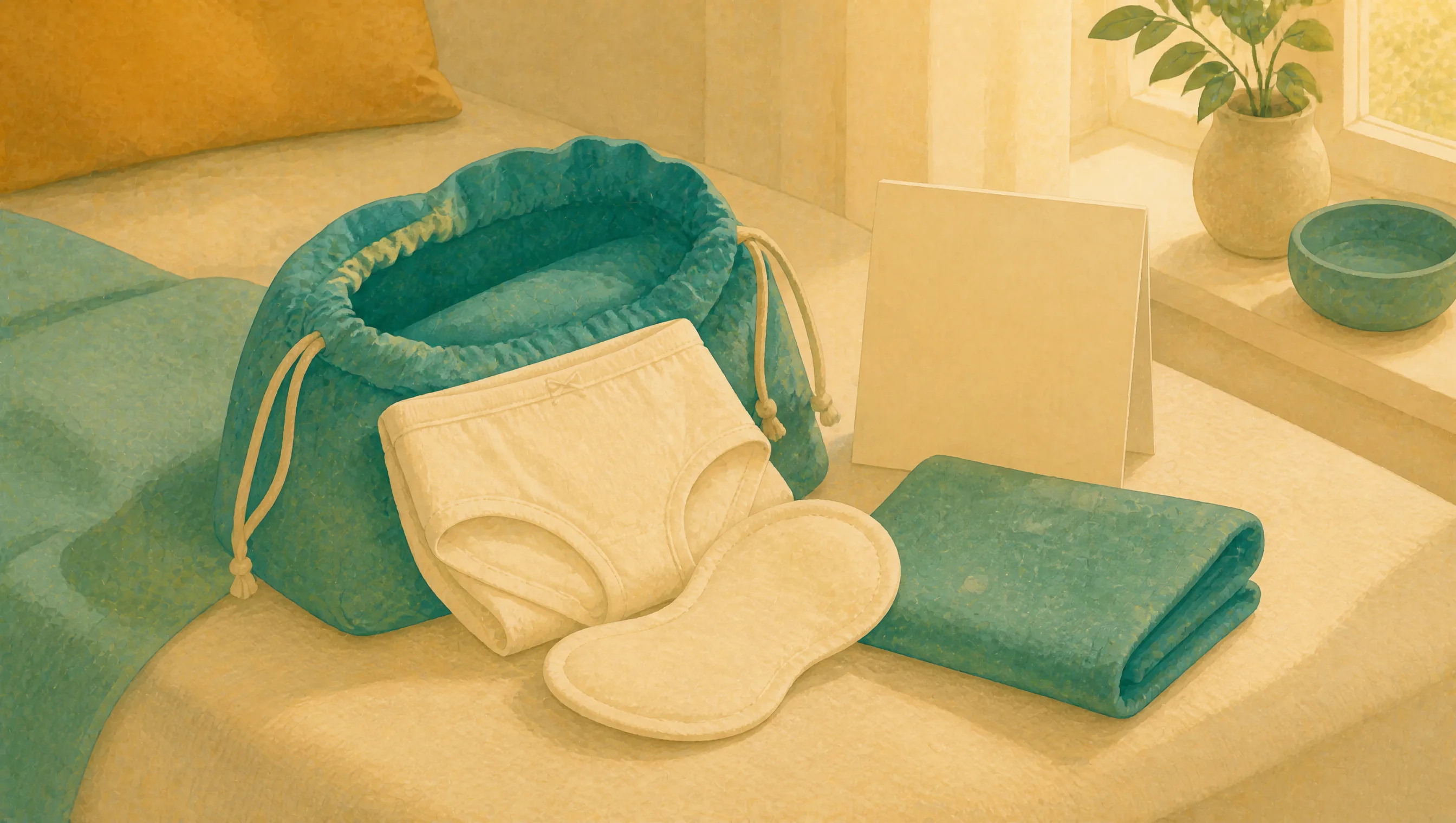
A small kit might contain:
- two or three chosen period products;
- spare underwear;
- a sealable bag for damp clothing;
- wipes that the young person can tolerate;
- a short instruction card; and
- the name or contact route for an adult who can help.
Keep a kit in more than one place if that reduces the memory burden. Check it together occasionally, but do not search the teenager's bag without agreement unless there is a specific safety reason.
Practise the non-intimate steps. Open a packet, peel the backing from a pad, place it in a spare pair of underwear and wrap it for disposal. Show where bins are. If the young person needs hands-on support during a period, agree who may help, how they ask and which parts they can do themselves.
You can say:
If you see blood, use the card or message me with the agreed word. You do not have to explain it in front of anybody.
Offer products as real choices
Pads, period underwear, tampons and menstrual cups have different sensations and practical demands. The best option is the one the young person can and wants to use safely. There is no prize for moving to an internal product.
Compare:
- how the material feels dry and when wet;
- whether the product has a smell;
- how much fine motor control it requires;
- how often it needs changing;
- whether the young person can tell when it is full;
- where it can be changed;
- how it is cleaned or disposed of; and
- whether the young person understands safe use.
Period underwear may reduce the steps for one person but feel bulky or damp to another. A pad may be easy to see and change but the adhesive or movement may be intolerable. Internal products require the young person to be comfortable with insertion, removal and hygiene. Do not use physical force or shame to achieve a particular method.
Introduce one item at a time and keep a workable alternative available.
Find the exact barrier
If periods are repeatedly difficult, separate the parts.
Recognising: The young person may not notice bleeding or a full product. Use agreed time checks if helpful, while avoiding a rigid schedule that ignores product instructions and actual flow.
Remembering: Keep supplies in the same visible place, duplicate kits and use a discreet reminder chosen by the young person.
Starting: Put the first item within reach and reduce the number of decisions. A written sequence can start with "take clean underwear and one pad" rather than "sort yourself out".
Motor skills: Try easier packaging, period underwear or another suitable product. An occupational therapist may help with the task if wider motor difficulties affect self-care.
Sensation: Test fabrics, absorbency, fit and unscented options. Change the method rather than insisting that the young person becomes used to pain or intense distress.
Communication: Agree a word, symbol, card or message that means supplies, pain relief, spare clothes or help.
Privacy: Check locks, bins, changing space and who can enter. A need for practical support does not remove the young person's right to dignity.
NICE recommends adapting care and communication to an autistic young person's individual needs and sensory environment.2 It does not identify one period product or schedule that works for autistic people.
Make a discreet school arrangement
Do not leave the teenager to negotiate separately with each teacher. Ask the relevant school contact for a simple plan.
It may include:
- leaving class for the toilet without explaining in front of peers;
- carrying a toilet card or using another agreed signal;
- access to products and spare clothes;
- a named adult who can help;
- somewhere private to change;
- a plan for stained clothing;
- water, movement or a rest space when symptoms are difficult; and
- adjustments when pain, fatigue or bleeding affects access to lessons.
Ask the young person what information can be shared and with whom. Staff need enough to follow the arrangement, not a public account of the person's cycle.
If the school restricts toilet access, explain the functional need in writing and ask how the young person can leave promptly. Review whether the plan works in lessons taught by different staff and during trips or exams.
Keep tracking voluntary and useful
A calendar, diary or app can help somebody anticipate supplies and describe symptoms to a clinician. It is also personal health information.
Ask before recording another person's cycle. Agree:
- what will be recorded;
- who can see it;
- where it is stored;
- what the information will be used for; and
- when it will be deleted or reviewed.
Useful entries may include the first day of bleeding, approximate flow, product changes, pain, headaches, sleep and whether symptoms interrupted school or ordinary activities. Use the teenager's own account rather than interpreting every disagreement or low mood as hormonal.
If a pattern seems to repeat, show the record to a GP with the young person's agreement. A few observations can support a health conversation, but they do not establish the cause.
Take pain and heavy bleeding seriously
Period pain is common, but pain that prevents sleep, school, movement or ordinary activity deserves medical attention. NHS guidance advises seeing a GP when pain is severe enough to affect daily life.3
The NHS also advises discussing heavy periods with a GP. Indicators can include needing to change a pad or tampon every one to two hours, needing two products together or bleeding that has a substantial effect on daily life.3 Do not wait for a young person to use the word severe. Ask what they cannot do because of the bleeding or pain.
Seek advice about:
- unusually heavy or worsening bleeding;
- severe or persistent pain;
- bleeding between periods or after sex;
- periods that stop unexpectedly;
- fainting, marked weakness or breathlessness;
- repeated vomiting or inability to keep fluids down; or
- any symptom that worries the young person.
A clinician may discuss investigation, pain relief, hormonal treatment or other options. Do not copy somebody else's medication plan. Aspirin should not be given to anyone under 16, and other medicines may be unsuitable because of health conditions or interactions.3 Ask a pharmacist, GP or appropriate clinician.
The GP and NHS Prep Pack can help the teenager prepare questions and describe the practical effect of symptoms. If appointments are difficult, use the guide to asking for reasonable adjustments.
Include contraception and confidential care
Periods are not only a hygiene topic. A young person needs accurate, age-appropriate information about pregnancy, contraception and sexual health whether or not adults expect them to be sexually active.
Do not turn every period conversation into an interrogation about sex. Explain that a GP or sexual-health service can answer questions privately. The teenager can choose whether they want you nearby, in the room for part of the appointment or not involved, subject to the clinician's safeguarding responsibilities.
Any decision about hormonal treatment, including using it to change bleeding, pain or cycle timing, belongs in an informed clinical conversation with the young person directly involved. A treatment that reduces one practical barrier may bring other effects or monitoring needs.
Review the support as skills and preferences change
At first, an adult may pack every kit and give reminders. Later, the young person may want control of supplies but still need money, transport or help arranging an appointment. Ask which part they want to own next.
Would you like me to replace the supplies, remind you to check them, or give you the money and leave it with you?
Support should follow the task. It should not become surveillance of the teenager's body. A workable period plan gives the young person information, options and a dependable route to help while respecting that the health information belongs to them.
Footnotes
-
The NHS starting-periods page uses gendered language in places. FamilyFX applies the practical information to any young person who menstruates. ↩
-
NICE CG170 applies to autistic children and young people under 19. The article's practical period framework is an accessibility approach, not a NICE-prescribed protocol. ↩
-
NHS thresholds and symptom examples guide when to seek medical advice. They cannot determine the cause of pain or bleeding for an individual. ↩ ↩2 ↩3
Sources and further reading
- [1] NHS. Starting your periods. Current NHS guidance (accessed 4 August 2026).
- [2] NHS. Period problems. Current NHS guidance (accessed 4 August 2026).
- [3] NICE. Autism spectrum disorder in under 19s: support and management. CG170. August 2013, updated June 2021 (accessed 4 August 2026).