
What counts as rest for a child who cannot switch off?
How to recognise and protect forms of rest that reduce demand and effort, even when a child does not look still, silent or conventionally relaxed.
The short answer
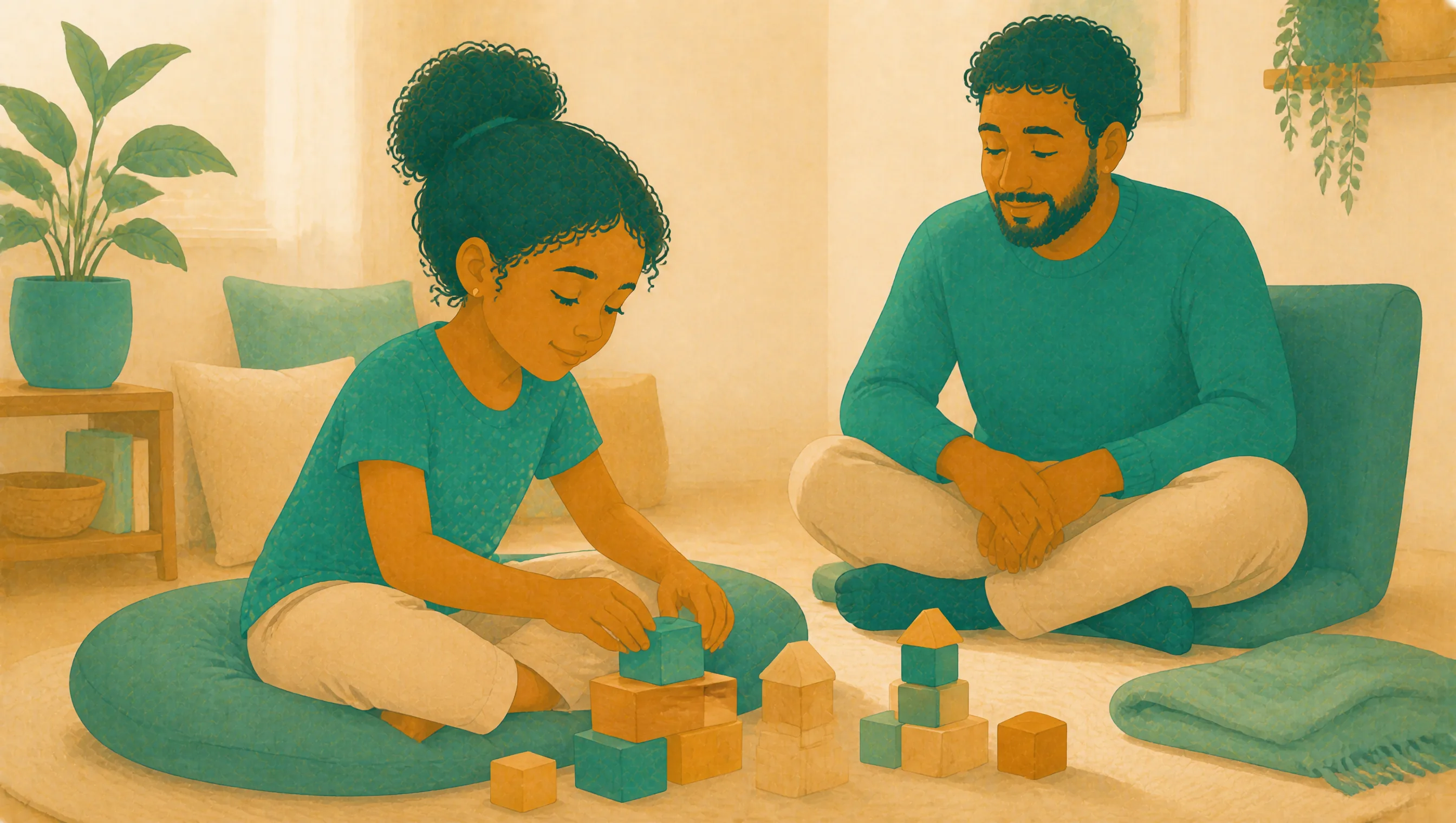
Rest does not have to mean sleep, silence or lying still. For a neurodivergent child, useful rest may be a familiar repetitive activity, movement without instruction, time alone, parallel company, drawing, sorting, listening, watching something predictable or returning to a special interest. Judge it by what it asks of the child and what happens afterwards: are decisions, social performance, sensory exposure and adult correction reduced, and does the child emerge no more depleted or distressed? Ask what feels restful, observe rather than impose, and offer a small menu that includes different levels of movement, sound and company. Protect the break from questions, chores and disguised learning. Rest should not be used to remove every valued activity or isolate a child indefinitely. Persistent exhaustion, loss of function, pain, severe daytime sleepiness or a major change in energy needs health assessment; a rest plan is not a diagnosis or a substitute for sleep.
- Rest is a reduction in effort and demand, not one required body position.
- Familiar movement, interests or parallel company may be restorative for some children.
- Judge a break by the child’s experience and its after-effect.
- Protect rest from decisions, correction and disguised productivity.
- New or persistent exhaustion needs assessment rather than a larger downtime schedule.
You have read your 3 free articles
Continue reading with FamilyFX membership
We keep three articles free so you can see whether FamilyFX is written for you before you pay for anything. Membership opens the full Library, all eight modules, fourteen deep guides, eight practical packs and eight tools for £79.99 a year.
Already a member? Sign in and this page opens straight away.
NeuroFX patients can use an access code for a free first year. Enter it on the join page.